
NFL teams don’t just “head to the airport and show up on Sunday.” Their travel routines are closer to those of a military deployment than to those of a business trip. Every week, more than a hundred people — players, coaches, trainers, doctors, security, equipment crews, and staff — move across the country in a tightly choreographed operation.
Fans only see the final product on the field. They don’t know the gear trucks that leave days before kickoff or the hotel meeting rooms filled with laminated charts and late-night walkthroughs. This guide pulls back the curtain to show you the surprisingly complex world of NFL travel.
- When Teams Leave for Road Games
- The Charter Flight Experience
- The Equipment Truck Leaves Days Earlier
- Security Presence and Convoys
- NFL Team Protocols
- Hotel Procedures and Night-Before Routines
- Meals, Nutrition, and the Food Operation
- Game Day Transportation
- FAQ: How NFL Teams Travel
- Final Thoughts on How NFL Teams Travel
When Teams Leave for Road Games
Most NFL teams fly out the day before the game. For a typical Sunday matchup, wheels usually lift off between 2 p.m. and 4 p.m. The schedule is designed to give players time to settle in, eat, attend meetings, and get a full night’s sleep before kickoff.
Sometimes teams leave earlier. West Coast teams often fly east a day early to help players adjust to the time change. International trips — London, Germany, and the occasional Mexico City — require even more buffer time, plus extra planning for customs and overseas logistics.
The weather can also move things up. If a snowstorm or hurricane is brewing, the league may tell teams to get moving sooner. And for Thursday night road games, it’s common for teams to leave on Wednesday afternoon so players aren’t scrambling through a short week.
The Charter Flight Experience
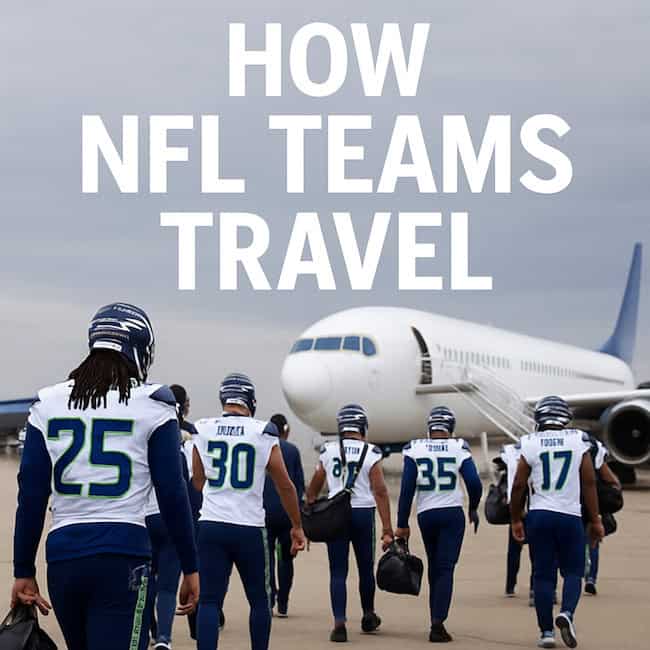
NFL players don’t wait at boarding gates or line up for TSA. Teams travel almost exclusively on chartered aircraft, using large jets with plenty of space and upgraded interiors. These flights run on the team’s schedule, not the airline’s.
The aircraft are usually wide-body jets, the same types used for long-haul international flights. These planes are chosen for a straightforward reason: space. Linemen aren’t squeezing into middle seats, and no one is trying to cram shoulder pads into carry-on bins.
The interiors are often reconfigured with wider seats, more legroom, and open areas for trainers and staff. A team’s medical equipment, training tables, and bulky video systems tuck neatly into designated cargo areas. On many teams, the equipment staff loads an entire mobile training room into the belly of the plane.
Players aren’t seated by star status. They usually sit by position group, which keeps the roster organized and allows last-minute film review or quick meetings. Quarterbacks and receivers often use flight time to walk through reads together, while linemen stretch out or relax.
On board, meals are tailored to the team’s nutritional plan. There are snacks everywhere — fruit, protein bars, pretzels, pasta cups, electrolyte drinks — because no one is interested in a dehydrated cornerback. The vibe varies by team, but many flights include card games, light music, and plenty of joking around. Others treat the flight like a quiet strategy session.
Learn how NFL crowd noise affects games.
The Equipment Truck Leaves Days Earlier
If you’ve ever seen an NFL equipment truck pulling out with a team logo on the trailer, that’s the start of the real road trip. These trucks leave days before the players fly out. For Sunday games, the journey usually begins Tuesday or Wednesday.
A single equipment truck can carry thousands of pounds of gear. Helmets, pads, cleats, uniforms, medical trunks, sideline tablets, communication headsets, tackling dummies — everything has a designated spot. There’s also backup gear for nearly every item, because no one wants a kicker without shoes or a quarterback without a helmet just because something got misplaced.
When the truck arrives, the equipment staff becomes the advance team. They unload everything, set up the locker room, and test communication systems on the field. They also prepare the sideline layout: benches, heaters or misters (depending on the weather), tablet stations, and endless boxes of tape and towels.
Some teams use the same truck driver year after year. These drivers know the stadiums, loading docks, security gates, and quirks of each venue. It’s not unusual for players to greet them as family.
Security Presence and Convoys
Security is one of the most controlled parts of NFL travel. Teams don’t leave anything to chance when moving more than a hundred people through airports, hotels, and stadiums.
When the planes land, the team is often met by police escorts. The buses line up in a tight convoy, usually three to five buses long. Depending on the city, motorcycle officers may block traffic, close ramps, or guide the convoy through side routes to avoid fans or congestion.
Traveling in a convoy keeps the team together and secure. It also helps maintain the schedule — nothing slows a pregame plan like a bus stuck behind a stalled minivan on an interstate.
At the hotel and at the stadium, access is heavily controlled. Only credentialed staff, security personnel, and authorized media can approach the team. Players move through private entrances so they aren’t mobbed by fans or forced to wait for photo requests while they’re trying to prepare.
NFL Team Protocols
NFL team travel protocols are built to move an extensive roster and support staff safely and efficiently. Operations managers finalize travel lists early in the week and coordinate with airports, hotels, and security personnel. Every detail—from timing to backup plans—is locked in before departure.
On travel day, players arrive at the facility hours in advance for treatments, meals, and final walk-throughs. Team buses then transport everyone to the airport under tight security. Boarding is streamlined to keep the schedule on track.
Charter flights are arranged to maximize comfort and recovery. Players have ample space, access to trainers, and nutrition tailored to their needs. The goal is to maintain physical readiness even while in the air.
Upon landing, teams move quickly onto police-escorted buses headed for the hotel. Meeting rooms are already set up for film reviews and position-group strategy sessions. Curfews and schedules keep players focused but allow time for rest.
Meanwhile, the equipment staff operates on its own precise timeline. They transport all gear to the stadium, often hours before the team arrives. This early setup ensures everything is in place well ahead of kickoff.
These layered protocols create a smooth, distraction-free travel experience. Every step is designed to support player performance. By the time the team reaches the field, the logistics team has already done its job.
Hotel Procedures and Night-Before Routines
Once the team arrives at the hotel, the operation shifts into a new gear. Teams usually book entire floors — sometimes an entire hotel — to maintain privacy and reduce distractions. Everything is pre‐arranged so players can focus entirely on football.
Room keys are handed out in minutes because the staff has already checked everyone in. Dinner is ready as soon as the players arrive, usually buffet-style with options for every dietary need. Training rooms are immediately set up with tape, massage tables, ice tubs, and the full medical setup.
Coaches conduct meetings throughout the evening. These sessions often include film review, final adjustments to the game plan, and a brief mental walkthrough. Some teams do a light “stretch and stride” in a hotel ballroom, taping out makeshift yard lines and walking through key formations.
Curfew is standard almost everywhere. Teams usually set it for around 10 p.m. for late games and 11 p.m. for early ones. Violating curfew is rare, but it does happen — and when it does, it’s almost always a story the team would rather not see on social media.
Discover the NFL Practice Squads Guide.
Roommate Policies: Who Shares and Who Doesn’t
Rooming policies vary by team and can depend on the time of year. Many teams give veterans their own rooms as a sign of respect and to ensure better sleep. Younger players, especially rookies, often room together to save space and to help them build relationships.
During the playoffs, many teams shift their policy. Everyone gets their own room, regardless of age or contract size. Coaches want players to be well rested and free from distractions, especially before high-pressure games.
Some players prefer roommates. Others sleep better alone. Teams try to strike a balance that creates the best performance.
Learn how NFL referees do their jobs.
Meals, Nutrition, and the Food Operation
NFL nutrition plans travel with the team. Hotels receive detailed menus in advance. Every meal is designed to support performance, hydration, and recovery.
Dinners usually include multiple protein options — chicken, fish, beef, and plant-based choices — along with pasta, rice, vegetables, and plenty of fruit. Hydration stations are stocked with water, electrolyte drinks, shakes, and snacks. Offensive linemen often require extra carbs, while receivers and corners look for lighter meals that won’t weigh them down.
Breakfast on game day is a team event. Players often attend position-group meetings while eating. Hours later, there’s a pre-game meal featuring simple, easily digested foods like eggs, oatmeal, potatoes, rice, and chicken.
After the game, players are starving. Postgame meals are loaded onto the plane or handed out on the bus. You’ll see everything from BBQ to pasta to custom-ordered meals for players with specific diets.
Explore how NFL players and coaches use bye weeks.
Game Day Transportation
Four hours before kickoff, the team begins its carefully timed march to the stadium. Buses depart in another police-escorted convoy, following secured routes that avoid fan traffic and potential delays.
Upon arrival, teams enter through private gates. The equipment crew is already inside, having set up the locker room, the sideline layout, the communication systems, and the warm-up gear. Players walk straight into a locker room ready for action — uniforms hung, cleats arranged, and everything in place.
Some players head to the field early for warmups. Others stay inside for taping, stretching, or mental prep. The rhythm becomes familiar, and teams try to replicate this order every week to keep players comfortable and calm.

The Immediate Return Trip
After the game ends, things move quickly. Players head straight to the locker room, and once coaches speak and everyone changes into travel gear, the team boards the buses for the airport. Sometimes players don’t even shower until they’re back home.
At the airport, the charter plane is waiting. Trainers tape ice packs onto players recovering from hits, while others load up on food. The mood on the plane depends heavily on the scoreboard — quiet on a loss, upbeat and relaxed on a win.
Flights typically land late at night, often between 8 p.m. and 2 a.m., depending on kickoff time. Players head home to sleep, and by morning, many are back at the facility for recovery sessions and film review.
Why Teams Don’t Stay Overnight After Games
Staying overnight might sound easier, but most teams avoid it. Returning home immediately helps medical staff begin treatment sooner. Trainers want players in their own facility, using their own equipment, on their regular schedule.
Waiting until morning delays everything. It shifts the Monday routine, pushes back film review, disrupts rehab, and throws off the weekly rhythm. It also adds security concerns because the longer the team stays in an unfamiliar city, the more variables the staff must manage.
Players prefer getting home, too. Even at 2 a.m., sleeping in their own beds helps them reset quickly for the next week.
International Travel: The Ultra-Complex Version
When teams travel overseas, everything is amplified. The planning starts months ahead. Every piece of equipment is inventoried for customs, and travel staff coordinate with international security, local stadium crews, embassies, and time-zone specialists.
Teams often spend extra days adjusting to the time change. Nutrition plans shift. Hydration becomes even more important during long flights. Coaches sometimes adjust practice schedules to help players acclimate.
International games also draw huge crowds, so security expands significantly. Teams travel with additional staff to handle fan engagement, media requests, and game-week events specific to these international matchups.
The Unsung Heroes Behind How NFL Teams Travel
For all the attention on players, the support staff makes NFL travel work. Equipment managers track thousands of items every week. Medical teams evaluate injuries, prep travel kits, and plan for emergencies on the road.
Travel coordinators handle hotel bookings, meal plans, bus routes, and flight schedules — all while adjusting for weather, stadium availability, and last-minute surprises. These jobs require long hours and a talent for problem-solving on the fly.
Players often say that when the team is on the road, these staffers are the first ones up and the last ones to sleep. They make sure players can focus on football, not logistics.
FAQ: How NFL Teams Travel
1. Do NFL teams fly commercial flights like regular passengers?
No. NFL teams almost always use charter flights explicitly arranged for them, which allows for flexible scheduling and extra space. These planes are configured for comfort, equipment storage, and the needs of extensive coaching and support staff.
2. How early do teams leave for road games?
Most teams depart the day before the game, typically in the mid-afternoon. International games or long-distance matchups may require an earlier departure to account for time zones or more extended travel.
3. Do players share hotel rooms on road trips?
It varies by team. Many give veteran players single rooms while pairing younger players as roommates, though some teams provide everyone their own room during the playoffs or high-pressure games.
4. Why do teams leave immediately after the game instead of staying overnight?
Teams want players back at their facility as fast as possible so they can begin recovery, injury evaluation, and Monday prep. Staying overnight disrupts the weekly rhythm and complicates medical and security logistics.
5. What happens to all the equipment teams bring on the road?
Most of it travels days ahead of the players by 18-wheeler. The equipment staff unloads everything, sets up the locker room and sideline, and tests communication systems well before the team arrives.
Final Thoughts on How NFL Teams Travel
NFL team travel is a high-stakes, high-precision operation. Behind every kickoff lies an entire week of preparation, coordination, and travel routines refined over years. From charter flights to police escorts to hotel curfews, nothing is left to chance.
When fans watch their team take the field, they’re seeing more than athletes. They’re seeing the result of a massive system designed to get a roster of giants across the country smoothly, safely, and ready to compete.
Next time you tune in on Sunday, remember: the game may be three hours long, but the journey to get there takes an entire week.
You are on our How NFL Teams Travel feature.
You might also like:
