
The NFL has produced legendary quarterbacks, bone-rattling tackles, and impossible catches. But some of football’s biggest game-changers never touched the ball.
They stood on the sideline with a play sheet, looked at the way everybody else played, and asked a dangerous question: What if we stopped doing it that way?
Football strategy is an ongoing argument between offense and defense. Somebody invents a better way to attack. Somebody else builds a defense to stop it. The offense adjusts. The defense responds. Before long, yesterday’s revolutionary idea becomes something a 12-year-old calls in Madden.
These innovations weren’t necessarily invented from scratch. Their importance lies in how they were perfected and spread throughout the NFL.
From the T-formation to the Air Raid, these schemes forced opponents to rewrite their playbooks—and helped make today’s game possible.
- 1. The T-Formation: Making the Quarterback the Center of the Action
- 2. The 3–4 Defense: More Linebackers, More Questions
- 3. Air Coryell: When Going Deep Became a Philosophy
- 4. The West Coast Offense: Four Yards Can Be Revolutionary
- 5. The 46 Defense: Buddy Ryan Sends Everyone to the Party
- 6. The Zone Blitz: Now You See the Rusher, Now You Don't
- 7. The Tampa 2: Speed, Discipline, and the Middle Linebacker Trick
- 8. The Outside-Zone Running Game: One Direction, Many Possibilities
- 9. The Air Raid Offense: Throw Often, Practice Everything
- 10. The Spread, Read-Option, and RPO Revolution: Make One Defender Wrong
- Final Thoughts: The NFL Is One Long Chess Match
1. The T-Formation: Making the Quarterback the Center of the Action
Key innovators: George Halas, Ralph Jones, and Clark Shaughnessy
Signature team: Chicago Bears, 1940s
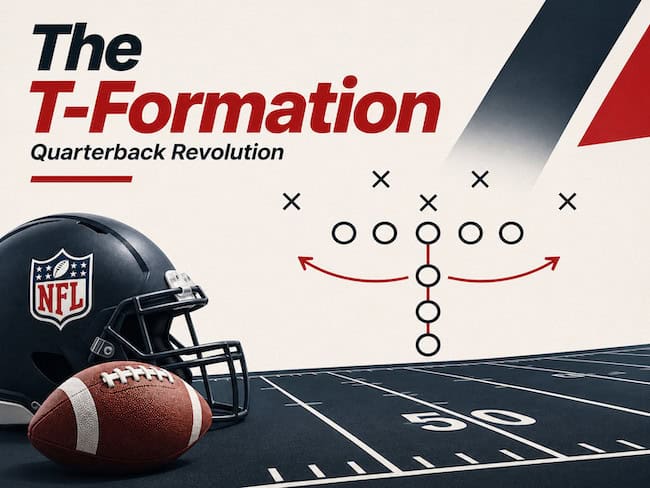
In football’s early decades, the single-wing was king. A snap might go directly to a tailback, who could run, pass, or hand off. The quarterback often functioned more like a blocker than the field general we know today.
The T-formation was not new, but the Bears’ sophisticated version transformed its possibilities. With the quarterback directly behind center and multiple backs positioned behind him, Chicago could disguise handoffs, run misdirection, and set up quick passes. Motion before the snap added another layer of uncertainty.
Sid Luckman became the ideal operator, selling fakes and getting the ball to the right player while defenders guessed which Bear actually had it.
The scheme’s coming-out party was not subtle: Chicago beat Washington 73–0 in the 1940 NFL Championship Game, still the most lopsided result in league history.
Other teams copied the system, and the T-formation helped establish a familiar NFL foundation: take the snap with a quarterback under center, then make the defense account for a full menu of plays.
Why it changed football: It pushed the quarterback toward the center of offensive decision-making and accelerated the move away from single-wing dominance. For a strategic revolution, 73–0 is a reasonably persuasive sales pitch.
Enjoy a chuckle or two with our funny football jokes.
2. The 3–4 Defense: More Linebackers, More Questions
Key innovators: Chuck Fairbanks and Bum Phillips, building on earlier ideas
Signature teams: 1970s New England Patriots and Houston Oilers
For years, the four-man defensive line was the standard NFL look. Then coaches realized there was another way to distribute their manpower: three defensive linemen and four linebackers.
The 3–4 had appeared in earlier forms, including in college football, but Fairbanks in New England and Phillips in Houston helped establish it as a true NFL base defense during the 1970s.
The extra linebacker created flexibility. A defender could rush from the edge, drop into coverage, or move around before the snap. A powerful nose tackle could occupy blockers in the middle, freeing linebackers to attack gaps.
For offensive linemen, identifying the fourth pass rusher became an unpleasant guessing game. And on running plays, the defense could change its fits without changing its personnel.
The scheme later became a cornerstone for coaches such as Bill Belichick, Dick LeBeau, Wade Phillips, and Dom Capers, even though their versions differed dramatically.
Why it changed football: The 3–4 expanded what a defense could conceal before the snap. Modern teams frequently switch between fronts, but the basic principle remains: the offense should not know where the pressure is coming from until it is too late.
3. Air Coryell: When Going Deep Became a Philosophy
Key innovator: Don Coryell
Signature team: San Diego Chargers, late 1970s–1980s
There were outstanding passing teams before Don Coryell. Sid Gillman, in particular, helped pioneer the modern vertical passing attack. Coryell took those concepts, expanded them, and turned them into an NFL spectacle.
With quarterback Dan Fouts, receiver Charlie Joiner, and tight end Kellen Winslow, the Chargers attacked defenses vertically and relentlessly. Coryell used receivers at different depths, pre-snap movement, and an especially creative role for pass-catching tight ends.
Instead of treating the deep ball as an occasional reward for running successfully, San Diego made downfield passing an organizing principle. Defenses had to defend the entire field, not simply pack defenders around the line of scrimmage.
The results were staggering. The Chargers led the NFL in passing yards for six consecutive seasons, from 1978 through 1983, then did it again in 1985.
Coryell’s influence traveled through coaches including Joe Gibbs and Ernie Zampese and into generations of route combinations and passing systems.
Why it changed football: Air Coryell showed how an aggressive, coordinated vertical passing attack could dictate defensive personnel and coverage. It also helped redefine the tight end: not just a blocker with hands, but a matchup nightmare with a parking space in the secondary.
Browse our feature on Fun Football Captions.
4. The West Coast Offense: Four Yards Can Be Revolutionary
Key innovator: Bill Walsh
Signature team: San Francisco 49ers, 1980s
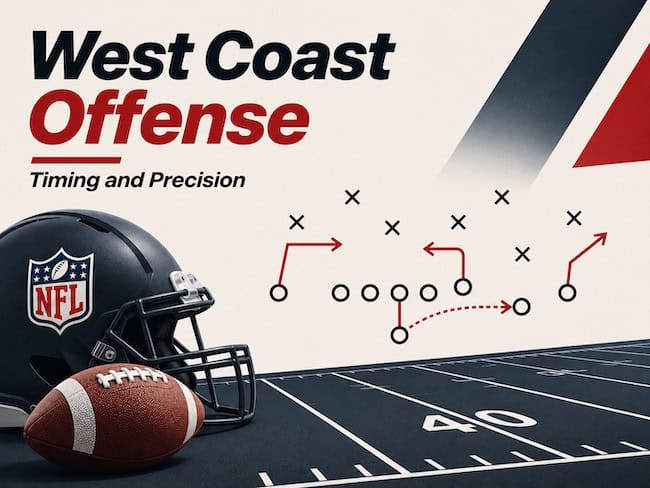
Traditional football wisdom said to establish the run, then throw the ball downfield. Bill Walsh asked why a quick, accurate pass couldn’t accomplish much of what a running play did.
Walsh developed his approach while working with the Cincinnati Bengals, then perfected and popularized it in San Francisco. The West Coast offense emphasized short, precisely timed throws, sharp routes, and yards after the catch. A quarterback took a three- or five-step drop and delivered the football as the receiver made his break.
It was not simply dink-and-dunk football. Walsh wanted to stretch the defense horizontally, create favorable matchups, and make defenders tackle in open space. A four-yard completion might become a 25-yard gain if the receiver found daylight.
Joe Montana ran it brilliantly. Jerry Rice turned it into art. Walsh’s 49ers won three Super Bowls during his tenure, while his coaching tree carried the philosophy across the league.
Walsh also helped popularize meticulous practice routines and scripted opening plays. Precision was not an accessory; it was the operating system.
Why it changed football: The pass could set up the run, control possession, and substitute for a conventional rushing play. Today’s quick-game concepts owe an enormous debt to Walsh—even when coaches call them something else.
5. The 46 Defense: Buddy Ryan Sends Everyone to the Party
Key innovator: Buddy Ryan
Signature team: Chicago Bears, especially 1985
Buddy Ryan wasn’t interested in letting offenses get comfortable. His 46 defense brought extra defenders toward the line of scrimmage, crowded running lanes, and created blocking problems before the play began.
Named for safety Doug Plank’s jersey number—not because it used 46 players, although quarterbacks might have argued otherwise—the scheme demanded aggressive linemen, active linebackers, and defensive backs capable of handling risky coverage assignments.
Against the run, the Bears could overwhelm blockers. Against the pass, the crowded front threatened pressure from multiple directions. Even when a particular defender didn’t blitz, the possibility could force protection changes and hurried decisions.
The 1985 Bears allowed just 198 points in 16 regular-season games, registered 64 sacks, and shut out their first two playoff opponents before defeating New England in Super Bowl XX.
The full 46 defense proved harder to sustain as NFL offenses spread the field and attacked isolated coverage. Its influence, however, survived in overloaded fronts and pressure packages.
Why it changed football: Ryan helped make aggressive defensive disruption a central philosophy rather than a change-of-pace tactic. For a season, the Bears didn’t just win football games. They made opposing playbooks look like bad ideas.
Read our feature on the Baddest NFL Coach: Defensive Wizard Brian Flores.
6. The Zone Blitz: Now You See the Rusher, Now You Don’t
Key innovators: Dick LeBeau and Dom Capers, building on earlier pressure concepts
Signature teams: Cincinnati Bengals and Pittsburgh Steelers
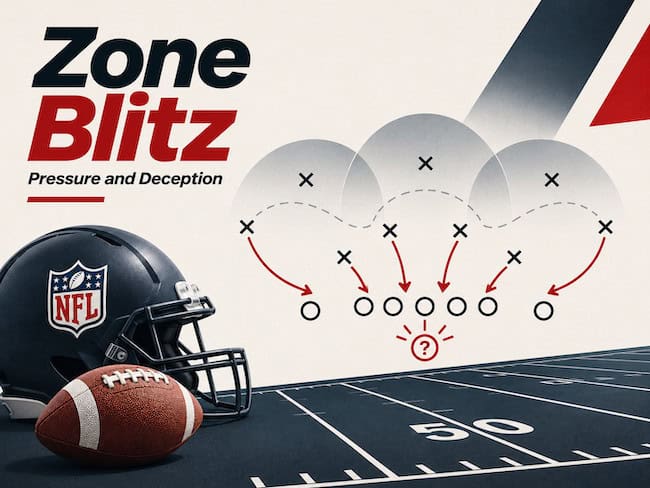
The classic blitz has a simple trade-off: send more rushers and leave fewer defenders in coverage. The zone blitz made that bargain less obvious.
LeBeau developed and refined an approach in which linebackers or defensive backs rushed while a defensive lineman sometimes dropped into a passing lane. The defense could create unexpected pressure without necessarily sacrificing all its zone coverage behind the rush.
Picture a quarterback noticing a linebacker charging toward him. He throws into the area that linebacker vacated—only to discover a defensive end waiting there. Surprise. The big fellow has apparently been promoted to pass coverage.
LeBeau began experimenting with these concepts in Cincinnati in the 1980s, then refined them in Pittsburgh. Capers was another major figure in the scheme’s development and spread.
The approach was particularly effective against timing-based passing attacks: disrupt the quarterback’s first read, change the picture after the snap, and make him hold the ball an extra beat.
Why it changed football: Disguise became as valuable as sheer numbers. Today, simulated pressures and creeper looks are more elaborate descendants of the same idea: threaten one thing, deliver another.
7. The Tampa 2: Speed, Discipline, and the Middle Linebacker Trick
Key innovators: Tony Dungy and Monte Kiffin, drawing on earlier Cover 2 concepts
Signature team: Tampa Bay Buccaneers, late 1990s–early 2000s
The Tampa 2 didn’t rely on sending the whole defense at the quarterback. Its genius was getting pressure from four rushers while positioning fast, disciplined defenders to close throwing windows.
At a glance, it resembled standard Cover 2, with two safeties each guarding a deep half of the field. The crucial wrinkle was the middle linebacker: rather than simply patrolling the short middle, he could run deep between those safeties, helping cover the vulnerable seam.
That assignment required exceptional range, which middle linebacker Shelton Quarles provided. Derrick Brooks starred on the weak side, Warren Sapp supplied interior disruption, and John Lynch brought physicality and coverage awareness behind them.
The Buccaneers’ championship defense in the 2002 season turned this philosophy into a league-wide coaching lesson. Teams copied its four-man rush, fast pursuit, zone spacing, and emphasis on turnovers.
The scheme wasn’t invincible. Patient offenses learned to attack its soft areas, and teams adjusted. That is how football works: somebody always finds the cheat code.
Why it changed football: Tampa 2 proved that disciplined coverage and an outstanding four-man rush could be every bit as disruptive as relentless blitzing.
8. The Outside-Zone Running Game: One Direction, Many Possibilities
Key innovators: Mike Shanahan and offensive line coach Alex Gibbs
Signature team: Denver Broncos, 1990s
Not every revolution starts with a quarterback throwing 50 passes. Sometimes it begins with five offensive linemen taking coordinated steps in the same direction.
Mike Shanahan and Alex Gibbs popularized a devastating outside-zone rushing attack with the Denver Broncos. Instead of assigning each blocker one specific defender, linemen worked laterally according to blocking rules, creating creases based on how the defense reacted.
The running back pressed toward the outside, read the developing blocks, and made one decisive cut. If defenders overpursued, an enormous cutback lane could open behind them.
Terrell Davis became the defining runner in the system, and Denver won back-to-back Super Bowls following the 1997 and 1998 seasons. Gibbs also challenged the notion that an offensive line had to be gigantic; coordinated, athletic blockers could be devastating.
The design became even tougher to defend when paired with bootlegs and play-action. Defenders flowing toward a supposed run might suddenly find the quarterback moving the opposite way, searching for an open receiver.
Why it changed football: Outside zone connected the running and passing games through shared backfield action. Its descendants remain central to modern NFL offenses, including the systems associated with Kyle Shanahan and Sean McVay.
9. The Air Raid Offense: Throw Often, Practice Everything
Key innovators: Hal Mumme and Mike Leach
Breakthrough programs: Iowa Wesleyan, Kentucky, and Texas Tech
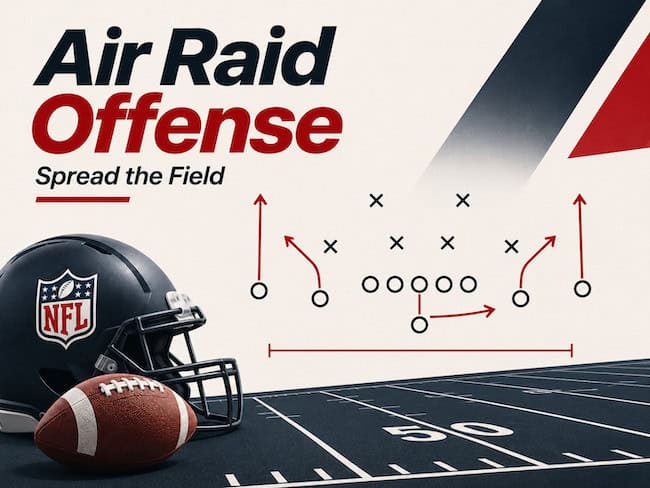
The Air Raid’s story is different from most on this list. It was built and popularized largely in college football before its principles spread into the NFL. Its influence was nonetheless profound.
Mumme and Leach challenged the idea that an offense needed a huge playbook or an imposing rushing game to succeed. Their formula: spread receivers across the field, emphasize a manageable collection of passing concepts, and practice those concepts relentlessly.
The vocabulary included Mesh, with crossing receivers; Four Verticals, which stretches deep coverage; and Y-Cross, designed to challenge defenders across multiple levels. The quarterback learned to recognize open space and distribute the ball quickly.
Instead of teaching 200 plays a little, the Air Raid taught a smaller group of plays exceptionally well. The system could make overlooked players productive and turn ordinary Saturdays into passing-yard festivals.
NFL teams rarely run a pure Air Raid. But its spacing, shotgun passing, simplified reads, and receiver-friendly concepts are everywhere. Kliff Kingsbury brought elements to the Arizona Cardinals, and Patrick Mahomes played within the Air Raid coaching lineage at Texas Tech before joining Andy Reid’s more varied Kansas City attack.
Why it changed football: The Air Raid influenced how coaches teach the passing game as much as what they call. Its enduring lesson is beautifully simple: mastering a few good ideas can beat collecting a hundred mediocre ones.
10. The Spread, Read-Option, and RPO Revolution: Make One Defender Wrong
Key figures: Chip Kelly, Doug Pederson, and coaches adapting college option concepts
Signature teams: 2010s Philadelphia Eagles and Baltimore Ravens with Lamar Jackson
The modern NFL increasingly asks defenders to make choices they can’t possibly get right every time.
Spread formations create space across the field. The read-option makes the quarterback a running threat: depending on an unblocked defender’s movement, he can hand the ball to the running back or keep it himself. A run-pass option, or RPO, presents a different decision: hand off or throw a quick pass based on defensive positioning.
Those plays aren’t interchangeable, but they share an insight. Instead of blocking every defender, the offense can read one, force him to commit, and exploit the space he leaves behind.
Robert Griffin III helped bring option concepts into the NFL spotlight in 2012. Chip Kelly increased their visibility in Philadelphia. Doug Pederson’s Eagles used RPOs effectively on their way to winning Super Bowl LII, and Lamar Jackson helped demonstrate how dangerous a quarterback-centered rushing game could become.
The NFL has adjusted. RPO usage declined from its 2023 peak through the 2025 season, according to Pro Football Focus, as defenses improved at identifying and countering the reads. But the idea remains part of the modern offensive toolkit.
Why it changed football: Quarterbacks posed an additional running threat, and defenders had to process more decisions in less time. Sometimes the smartest block is the one you never attempt.
Final Thoughts: The NFL Is One Long Chess Match
What these 10 strategies share isn’t a formation or championship trophy. Each forced opponents to change.
The T-formation demanded new defensive answers. Air Coryell attacked those defenses vertically. Walsh stretched them horizontally. Buddy Ryan attacked the quarterback; LeBeau disguised the attack. The Air Raid spread the field, and modern option offenses began reading defenders instead of blocking them.
That’s football’s cycle: solve one problem, create three more, and give 32 coaching staffs something to argue about on Monday morning.
The next great NFL innovation is probably being tested right now—on a practice field, in a film room, or on a whiteboard covered with arrows. Somewhere, a defensive coordinator is already losing sleep over it.

By Mike O’Halloran
Founder and Editor, Sports Feel Good Stories
Mike O’Halloran founded Sports Feel Good Stories in 2009. He has authored three books on sports jokes, co-authored four trivia books, and authored three books on basketball coaching. Mike has also written a book on sports slogans and captions. He coached youth basketball for 15 seasons, taught tennis, and was a contributing writer for USA Football, the youth arm of the NFL.
Mike is the publisher of the Well-Prepared Coach line of coaches’ practice plans and editable award certificates. He is the founder of the Fantasy Football Team Names Hall of Fame. Mike is married with four children.
You’re on our 10 Football Strategies That Changed the NFL Forever feature.
You might also like:
Thanksgiving Football Trivia Challenge
