
Offside infractions have often affected numerous important championship-level matches throughout soccer history. In the past, many players could escape this offense in several crucial moments. However, the advent of VAR has made it impossible for anyone to avoid it.
We often see players turning their heads toward the sideline as soon as they score. They do so to see if any of the linemen have raised their flags. The goal is not accepted if any flag is raised. Thus, players who begin celebrations early without making sure they’re not offside are often disappointed.
When a player is past the defenders’ line and next to the opponent’s goalpost, the referee raises his flag for an offside foul. This happens as soon as the offender’s teammate hits the ball, and an indirect free kick is offered.
Defenders often use an offside trap by staying as far away from the goalpost as possible. As a result, the strikers also stay away from the goal.
The offside rule may not sound very complicated, but there are several details every soccer player needs to understand. Being aware of the complexities of offside makes it convenient for the defenders to set an offside trap. It, however, also allows the offenders to escape this trap.

Essential Details to Understand the Rules of Offside Offense
Here are some specific questions and answers related to the offside rule.
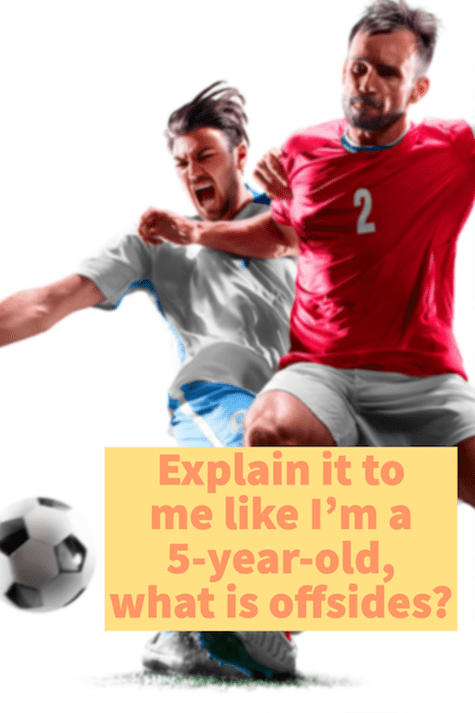
What is an offside?
Imagine yourself as a player on the opponent’s side of the football pitch. If any part of your body is closer to the goalpost than the nearest defender of the opponent, the ref will raise the flag as soon as your teammate passes the ball to you.
See 100+ Funny Soccer Jokes, Puns, and Riddles.
Who calls an offside?
If you have watched any soccer matches, you must have seen two referees constantly running on the field’s sidelines. These linemen are assistants to the referees, who call the offsides based on their judgment.
What happens when an offside is called?
Soccer fans often see players turn their faces toward the sidelines after scoring to check the flag. If the linesman raises the flag to give offside, the goal is not considered, and the other team also gets an indirect free kick.
See Soccer Positions: Roles, Responsibilities, and Formations.
Exceptions to offside?
An offside cannot be given during a corner kick. Therefore, the defensive teams try to stay as close to the goal as possible to keep the opponents away.
Similarly, an offside is not called during a throw-in or kick-in. Once the second player touches the ball after a corner kick or throw-in, the linesmen become diligent again in looking for any offside.
The arms of a player are also not regarded by the linemen when calling an offside. Except for the arms, all other parts of a player’s body are included in deciding an offside call.
Further, if a player is standing offside but his teammate passes the ball to another teammate in a legal position, the offside will not be called. For further clarification, let’s suppose the striker is in the offside area, but the left winger is not. Now, if their teammate passes the ball to the left winger, the linemen will ideally not raise their flags.
An offside offense can also not be called on any team members within their defensive half. The offside can only be called when a player is past their defensive half.
Explore our World Cup Jokes and Puns.
Loopholes of the offside rule
In a 2018 Liverpool match against Real Madrid, Salah was dragged down by Ramos. The referee called an offside on Salah. Salah’s impact on the ground led to the injury that kept him out of the field for the next three months. Ramos was not penalized for that, as he had fouled Salah after an offside was called.
What is VAR and How Does it Work?
The famous goal of Ronaldo in 2017 vs. Bayern was not given offside. However, it was an offside offense that was noted only after many analysts had reviewed it in slow motion. This error resulted in Ronaldo’s hat trick and a great victory for Real Madrid.
Since technology has revolutionized every sector, soccer is no different. The cameras catch everything in great detail. Therefore, any moment of the match can be meticulously replayed by the referees to make efficient and just decisions.
The introduction of Video Assistant Referees (VAR) has made it impossible for players to escape the offside rule in soccer. Today, a VAR keeps an eye on multiple camera angles. This happens through various screens, allowing referees to keep an eye on sneaky fouls.
Moreover, VARs can review replays in slow motion. This helps ensure that no one escapes an offside offense or other fouls.
Some soccer fans do not like VAR’s intervention in a soccer match. They state that it takes a lot of time, which might cause some players to lose their tempo. Furthermore, fans lose interest in a match when VAR keeps interrupting the game.
Nevertheless, the pros that VAR has brought to the game’s transparency may well outweigh the cons.
Learn How the FIFA World Cup Works.
Futbol offside final thoughts
So, now that you know what offside is all about, you’re not that far from training to be an official. You’ll need to master a few other game rules to carry out this role. Good luck.

By Mike O’Halloran
Founder and Editor, Sports Feel Good Stories
Mike O’Halloran founded Sports Feel Good Stories in 2009. He has authored three books on sports jokes, co-authored four trivia books, and authored three books on basketball coaching. Mike has also written a book on sports slogans and captions. He coached youth basketball for 15 seasons, taught tennis, and was a contributing writer for USA Football, the youth arm of the NFL.
Mike is the publisher of the Well-Prepared Coach line of coaches’ practice plans and editable award certificates. He is the founder of the Fantasy Football Team Names Hall of Fame. Mike is married with four children.
You are on our “What is offside in soccer” page.
Originally published: November 21, 2022
You might like:
